
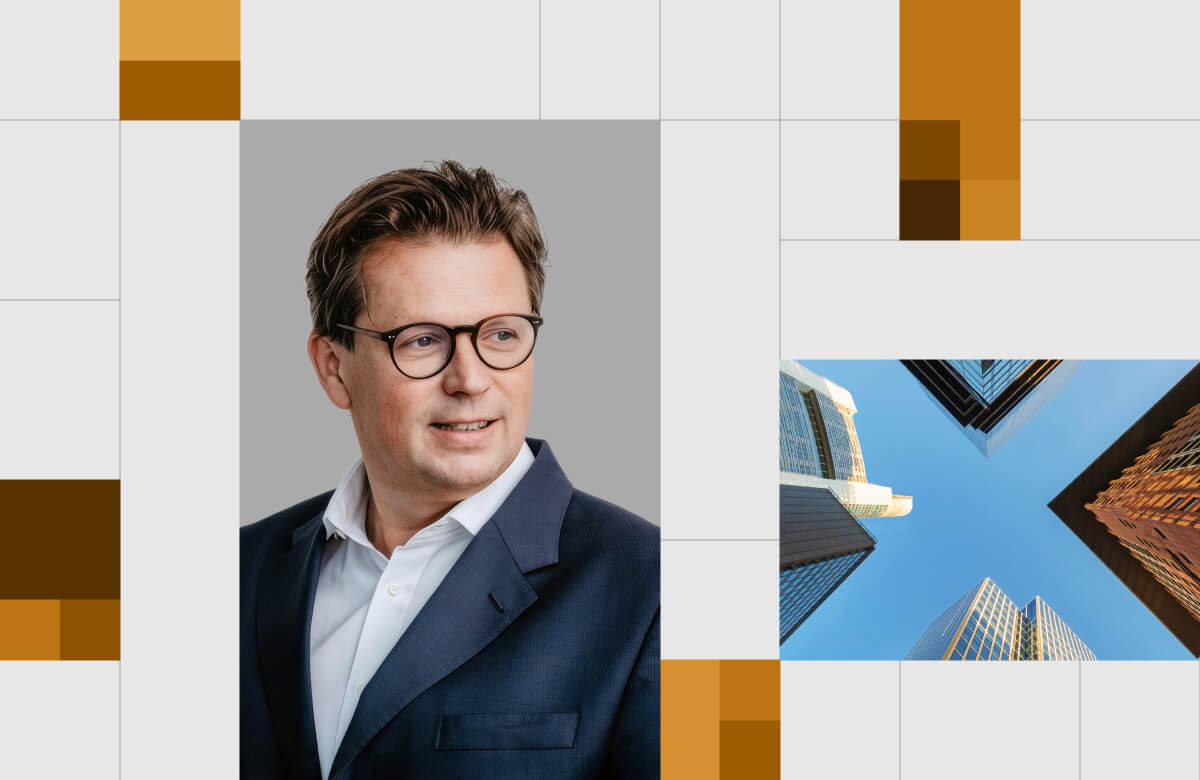

Dr. Michael Drill never planned to become an investment banker. With a PhD in investor relations, he was heading for a career in management consulting until a night at the cinema changed his mind.
Today, he is Managing Director and Head of Germany at Lincoln International, which he has led since 2006. Over more than 30 years in M&A, he has worked at Schroders and Sal. Oppenheim, been involved in more than 125 transactions, and teaches M&A at Frankfurt School of Finance & Management.
He shared how he got started, the deals that shaped his career, and his views on AI and the German mid-market.
Q: Could you tell us a bit about your background and how you got into M&A?
I studied economics in Switzerland. During my studies, I was already interested in finance and stock market topics, and then I decided to write a PhD on investor relations, which was very finance-driven.
However, at that time, when you did a PhD in Germany or Switzerland, it was very fashionable to join a management consultancy like McKinsey or BCG. At that time, the profession of an M&A banker was completely unknown in the DACH region. We’re talking about 1992, 1993.
But by coincidence, one evening I saw the film Pretty Woman. I thought, gosh, this is interesting. Richard Gere has a cool job. Maybe it’s more interesting than advising large corporates on strategies or cost efficiency measures. So, I decided to pursue a career in investment banking and M&A, executing takeovers and hostile takeovers.
Q: Where did you get your first investment banking role?
At that time there were no investment banking jobs locally, because deals in Germany were managed without M&A advisors, just with lawyers and maybe accountants. So, I wrote to Schroders in London applying to work either on their French or German deals desk.
They told me they already had strong candidates for the French desk, but they could offer me a role covering German companies. I said, “Okay, I’d be very keen to join. However, I don’t have any working experience as an analyst because I did my PhD. That said, I’m much better educated than all the others, and you need to give me a job as an associate, otherwise I will not come.”
At that time they compromised, hiring me as an associate from day one.
Q: You’ve mentioned that your career was partly inspired by Pretty Woman. Can you tell us more?
When I saw this film, I wasn’t only intrigued by Richard Gere but also by Julia Roberts. And what happened? I really ended up marrying a pretty lady called Julia.
Q: When you first came into the industry, what was the steepest part of the learning curve?
When I started, I thought I’d be focusing on analysis and valuations. What I completely underestimated is that being an M&A banker is also very much about supporting processes, including buy-side processes, and influencing people, making sure that they feel good about the potential project.
These social and emotional elements of a transaction were completely new to me.
I was also surprised that in our industry it was much more about writing emails, letters and drafting presentations than doing comprehensive financial modeling.
And when I started my career in the ’90s, the notion of M&A in Germany wasn’t there. Half of our meetings with clients were spent explaining what an M&A investment bank does, what services we provide, and why these services are important and create value.
Today everyone understands this, but at that time it was completely new.
Q: Is there any advice you would give to somebody trying to break into M&A now?
I think the advice today is completely different from 10 or 20 years ago. Before starting a career in M&A, I would always advise doing one or two internships, to understand our business with all its specific ups and downs and become familiar with the role of a junior banker.
People need to understand that the first years involve a lot of work, but afterwards it will be rewarding. If you really want to start a career in M&A, you need to show commitment and be aware that here and there, also on weekends, you will need to compromise.
I would also recommend that during those first internships, people look in the mirror and be honest with themselves about whether they really have the skills to break through in M&A. Skills doesn’t mean being very analytical. Today, it’s more about social and emotional intelligence, communication style, the way you convince people, and charisma.
Q: Were there any pivotal moments or specific deals that really shaped your career, and why?
I’ve been in this business for more than 30 years, and I’ve been involved in many, many projects, most of which I led as project head. There were two that really shaped my career at Schroders and Dal. Oppenheim.
The first is the privatization of Deutsche Postbank in the ’90s. This was a huge assignment for Schroders, my employer at the time. I played an important role because I was one of the very few people on the project team who could write decent letters in German and communicate with the German politicians, including the finance minister and the post minister at that time.
Although I had only limited M&A skills and experience, I could play a very important role. As the privatization took many years, I was in a strong position at Schroders, and got promoted very fast to director. That really helped my career.
Q: And where did you go next?
After more than five years, I decided to leave and start as Head of M&A Advisory at Sal. Oppenheim. At that time it was the largest European private bank, with an M&A team of around 35 professionals, and the owners of the bank asked me to join as head.
So all of a sudden, after only five years of working experience, at the age of 35, I took over responsibility for 35 smart bankers, many of them older than myself. That was clearly a challenge, because until then I hadn’t had a lot of management exposure.
But I was very lucky. One month before I started the new position, I had already originated a very nice sell-side engagement for the bank.
Q: Can you tell us more about that deal?
It was in June 2000, the high of the markets. The engagement was the sale of a listed French online broker called SeffTrade, which I sold within three months to a listed German online broker, Direkt Anlage Bank (DAB). The deal was structured as a paper deal, so consideration was in newly issued DAB shares.
When we started the sales process, we thought we might generate an enterprise value of roughly 100 million EuroDeutschmarks. But during the process, the share prices of SelfTrade and Direkt Anlage Bank went crazy, and we sold this online broker at the time of signing the SPA for more than 900 million euros. We were able to collect a record double-digit fee for my new employer, and for me as a new joiner.
It was really a jump start. With this deal, we made more money in a few months than the entire M&A department over the last few years, and it obviously helped me get respect from my new colleagues.
Now I’ve been with Lincoln for more than 20 years. In those 20 years, I’ve closed around 100 deals, and I would say 70 or 80 of them I led as project head. I’m very proud of many of them. However, I like one in particular, because I can really claim for myself that I’m Europe’s largest drug dealer!
A couple of years ago I sold Bionorica, a large cannabis business, at a very high price to the Canadian-listed cannabis player Canopy Growth. It was a transaction in excess of 225 million euros.
Q: What are the biggest changes you’ve seen in dealmaking over the past 30 years?
There are a lot of changes. Business is getting faster, and people need to react faster. Deals are becoming much more complex, and there are a lot of advisors involved. Buyers are much more diligent and much more cautious.
Although everything is getting faster, processes take more time because there are various work streams that we didn’t see in the past, such as AI and ESG.
What has also changed is that it’s no longer such a growing industry as it was maybe 15, 20 or 30 years ago. At that time, the number of deals increased significantly each year, and the M&A teams of investment banks were growing.
People got promoted relatively fast, and it was easy to get good jobs. Now we are in a more mature market, and there’s more interest from junior talent in going into M&A. The bar is getting higher each year.
Q: How do you think AI will change banking roles, at both the junior and senior levels?
It will continue and will probably even become worse, because AI will replace some of the bankers who currently do a lot of analytics and research. In the future, this could be done by AI tools, so for the same outcome we probably need fewer junior bankers.
AI will change the focus of our work and the skill set required of an M&A banker. Going forward, the banker may not need to know all the content by heart. He needs to have good technological skills and understand how to use AI efficiently.
And as artificial intelligence can’t replace emotional intelligence, you need both content and emotional intelligence to get a deal done.
And you will always need a good, solid knowledge base in your brain. In a discussion with a client, you can’t just say, “Hold on a sec, I need to ask ChatGPT and I’ll give you the answer.” It doesn’t make a good impression, and it doesn’t create comfort and confidence.
Q: What is your outlook on the German mid-market for the next one to two years?
I expect an increase in activity. I think momentum will increase, and we will see more deals, although the M&A environment is not really friendly. We have lots of geopolitical deal stoppers.
However, we also have a lot of new drivers. Especially in Germany, we see succession topics in the Mittelstand, and a lot of privately owned companies will come up for sale. A lot of private equity portfolio companies in Germany will also need to come to sale. They already have an average holding period of seven years, which is a lot.
On the buy side, we expect a lot of money that needs to be invested from financial sponsors, and also from strategic buyers abroad. Large corporates need to do acquisitions, especially in Germany, and they need to grow inorganically in order to justify their current high valuations on the stock market.
Having said that, we also need to be realistic. We come from a low level. This increased deal activity will not happen in a euphoric, hot environment. We will see more deals and more processes, but buyers will still be very cautious and very diligent, and not overpaying with lunatic hype prices.
Q: Is there anything else you’d like to share?
I’m very happy that I’ve been with Lincoln for more than 20 years, and that Lincoln went public this May on the New York Stock Exchange.
That was very exciting and the highlight of my career. I’m very proud of what we achieved as bankers and as entrepreneurs here at Lincoln.